
Northern Giant Horsetail - Natural Dyeing
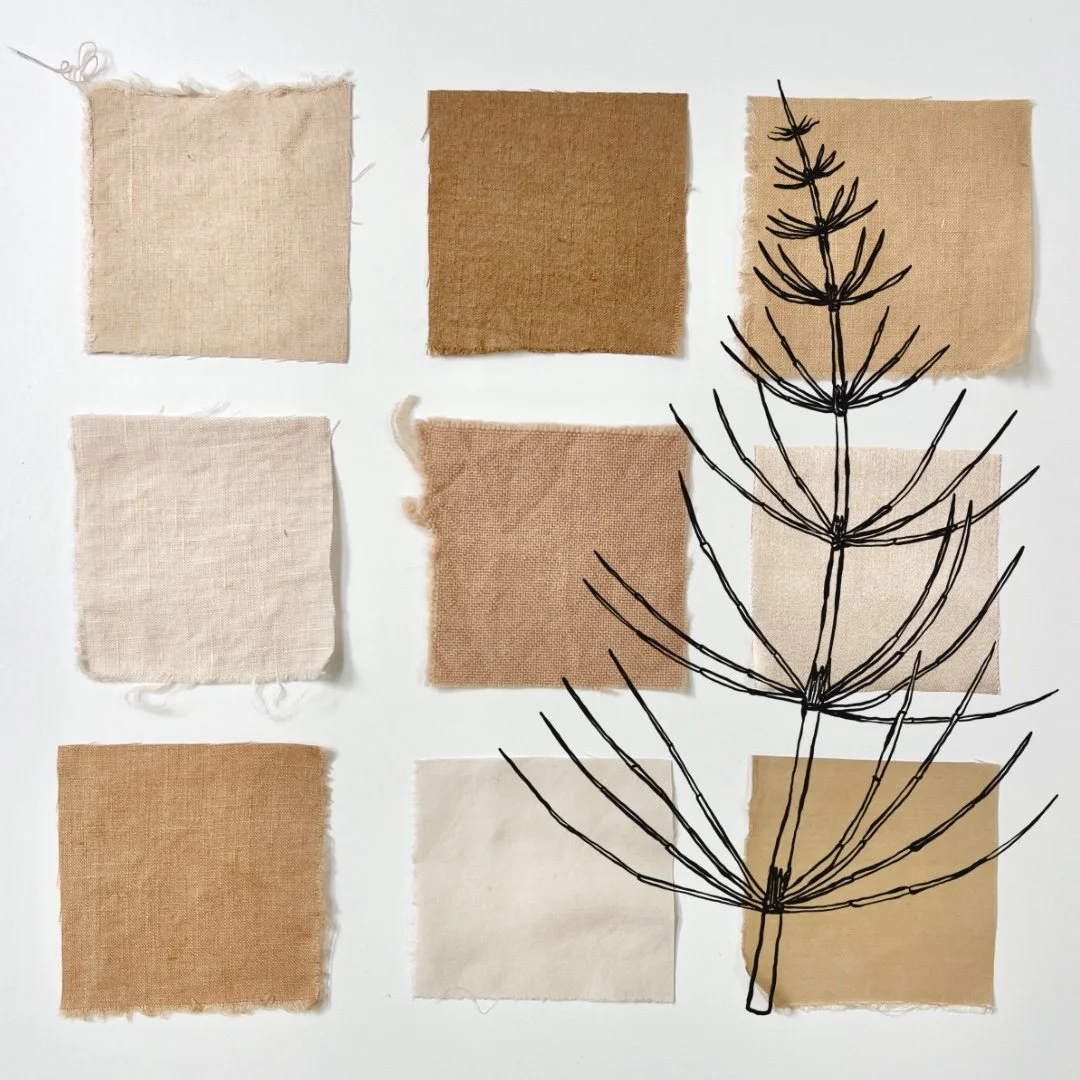
Giant Horsetail(foxtail-rush)-Equisetum telmateia -Substantive and Field Horsetail - Equisetum arvense-Substantive
Giant Horsetail and Field(Common) Horsetail are part of one of the most primitive living plant families in the world. There is a thriving patch up the road that I look forward to gathering from every year. It produces lovely, soft dusty pinks and puddy pinks, depending on the fabric and whether you use a mordant. Horsetail is substantive because of the plant's high mineral content.
This herbaceous perennial plant has an unusual distribution, with one subspecies native to Europe, western Asia, and northwest Africa, and a second subspecies native to western North America. The North American subspecies is often simply but ambiguously called "giant horsetail", but that name may just as well refer to the Latin American Equisetum giganteum and Equisetum myriochaetum. The pale yellow cone-topped fertile stems appear in early spring. A mask must be worn when collecting spores. Sterile frilly shoots grow during the late spring and summer months and begin dying off in autumn. I've found that you get the soft pinks before the hot dryer season of summer. I usually stop collecting horsetail once the fronds feel dry. This is when the color shifts towards tan. The frilly shoots have a sandpaper-like feel. Both variations produce soft pinks on unmordanted cellulose fibers and dusty mauves on unmordanted protein fibers or cellulose fibers mordanted with aluminum salts. Spores from fertile stems can be used, but only if the plant is abundant. It's important that you gather spores mindfully. They are an integral part of the plant's life cycle.
Folk Magick: This magickal plant is used to strengthen both physical and emotional boundaries.
Range: Generally found in temperate climates. Varieties are native to Europe, western Asia, and northwest Africa. The Giant Horsetail I used is native to Northern California. You can find it thriving in damp shady places, grasslands, farmlands, coastal areas, and even gardens.
Growing Habitat: It is found in damp, shady places, spring fens, and seepage lines, usually in open woodlands.
Harvest Time: Fertile stems early spring, sterile fronds late spring to mid-summer. Once it gets hotter and drier, the pale pinks shift to a putty pink and even tan. These harvest times are based on my area in Northern California. The window for gathering may vary depending on the soil's moisture content and air temperature.
DyeStuff: Non-fertile fronds and stalks.
Fabric Samples are a mix of white and mixed linen, cotton, wool, and silk
Dyeing Instructions can be found in my book ‘The Natural Dye Handbook’. I have signed copies of my book available in my shop.
This is an affiliate link to Bookshop.org, which supports independent bookstores. This means that if you purchase through my link, I may earn a small commission, at no extra cost to you. I encourage you to buy my book from your local independent bookstore. Check your local library and see if they have a copy.
More information is available to paid members on my Patreon. If you're interested in subscribing to my Patreon and supporting my exploration of natural dyes. My Patreon is mainly focused on slow stitching, but I’ve begun posting about four natural dye plants each month.
You can find sashiko thread naturally dyed with Solstice Wort in my shop. There are 10 different colors to choose from, including one I overdyed with indigo to create a beautiful dappled effect.
I teach Botanical Dyeing at Art Stays at Emandal and at the Fibershed Learning Center in Northern California. If you are interested in exploring your landscape, foraging for plant dyes, and learning more about how different mordants and fabrics affect color, please check out my events page.
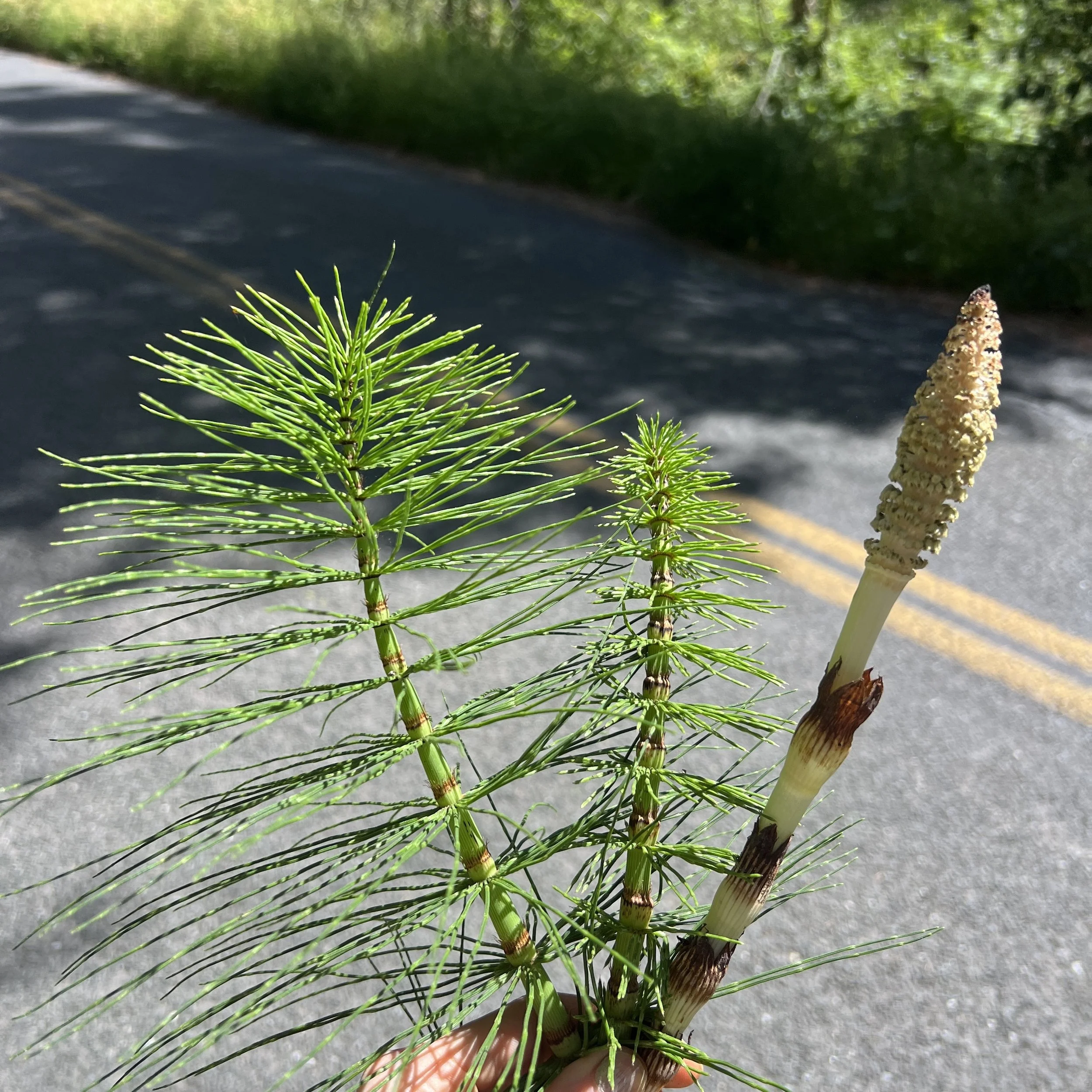
Non-fertile stems on the left and fertile stem on the right.
This is a photo I took near my house on May 20, 2024. There is a well-established patch along the side of the road. There is a tiny patch along the easement by the property line that I'm now keeping an eye on. I added both spots to my map, along with the date and the sizes of the patches.
Fast forward to March 25, 2026. I found and gathered a vial of spores from fertile stems. We had an unusually warm late winter and early spring. We've also consistently had a proper rainy season for the last two years. I think this has impacted the earlier availability of this incredible plant.