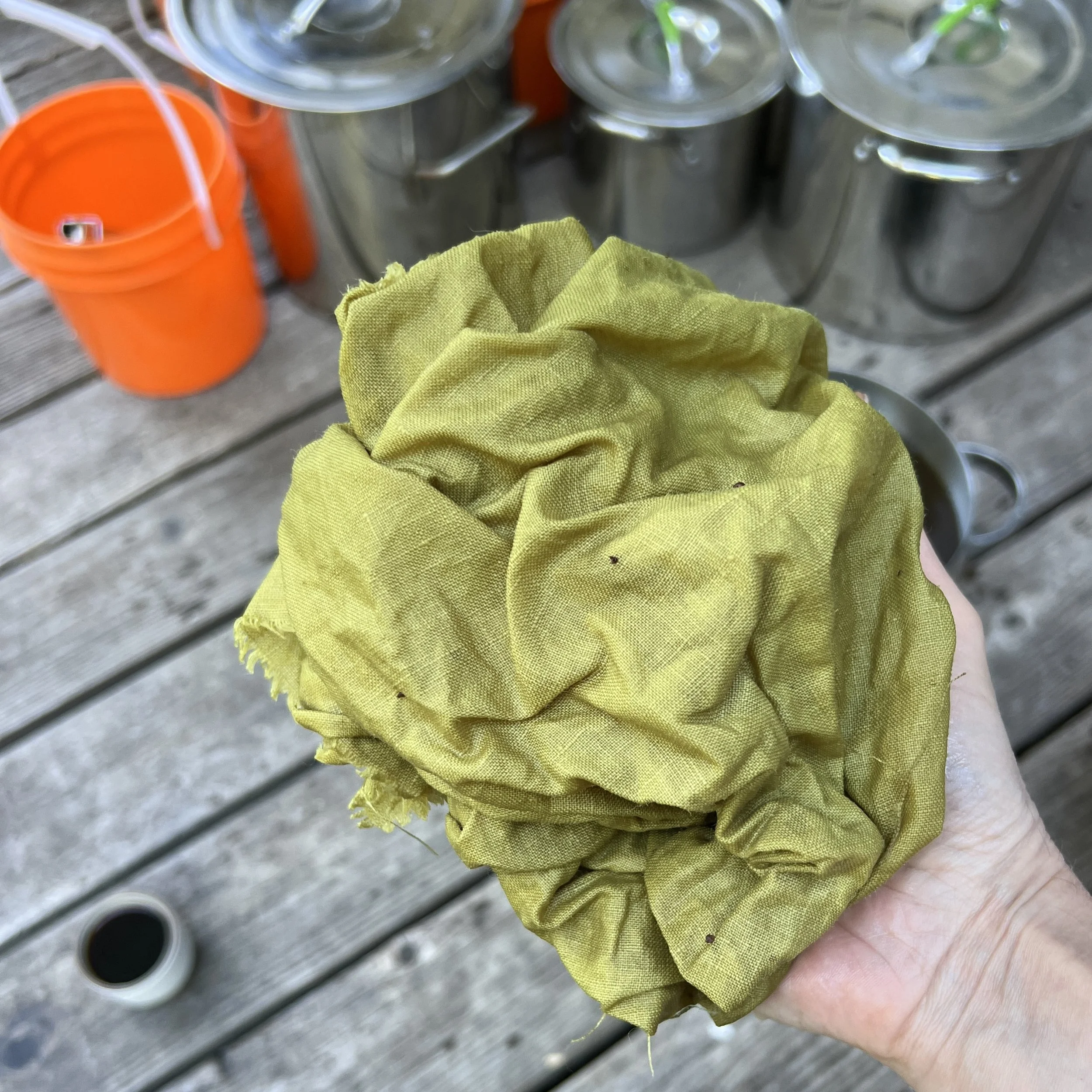
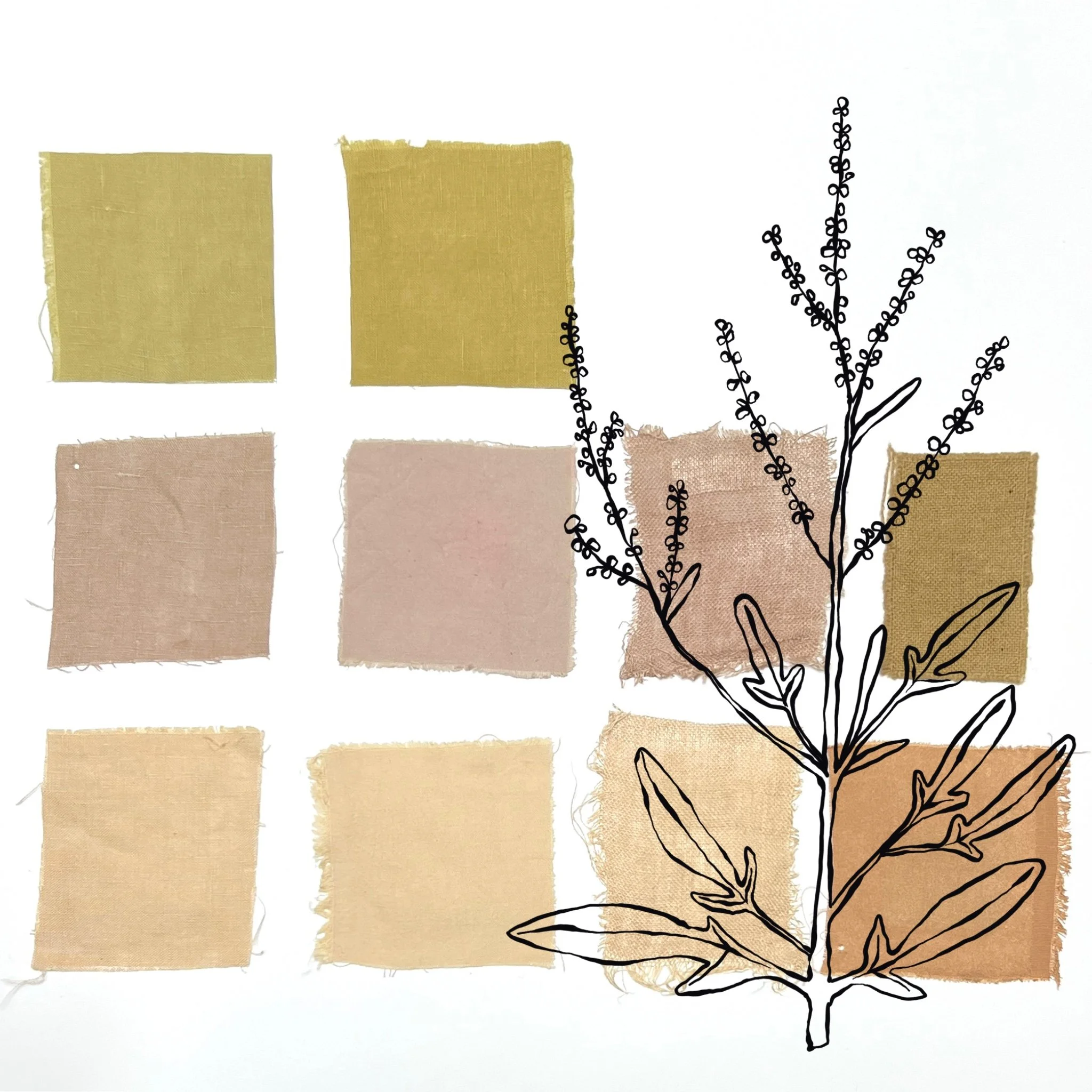
Sheep's Sorrel - Rumex Acetosella - Adjective
I know most people would not find the colors from sheep's sorrel as provocative as I do. At first glance, are they really that special? For me, the answer is a resounding yes. This little roadside plant turns a beautiful crimson and glows like a jewel when the seeds ripen. I love spotting patches of them while I'm out and about driving to town or out to the coast. And yes, I know how difficult this plant is to remove from lawns and gardens once it’s established, and many people consider it a noxious weed.
This is a little background on Sheep's Sorrel(Rumex acetosella). It's a widespread perennial "weed" in the buckwheat family, characterized by its arrowhead-shaped leaves, reddish stems, and ripe seeds, and is known for its aggressive, spreading rhizomes. It thrives in disturbed, acidic soils and is often found in fields, lawns, and roadsides. It has lovely tart lemony-flavored edible leaves, and it's a valuable plant for wildlife, attracting specific butterflies like the American Copper.
If you're curious about cooking with it, you might find this article interesting. I discovered that the female plants have ruby-red flowers and seeds, which I harvested and used for natural dyeing.
After many years of experimenting with plants, my relationship with them and the landscape has changed. I always wonder what color they might produce; do the colors shift depending on the time of year, the climate, and the soil? Is the plant edible, medicinal, or poisonous? What role does that plant play in the ecosystem?
My curiosity doesn't stop there. What roles do the words weed, invasive, exotic invasive, native, naturalized, ornamental, and edible play in how I think and feel about a plant? Do these words shape the way you think and feel about plants?
Fabric Samples are a mix of white and mixed linen, cotton, wool, and silk. You can achieve different colors depending on the time of year you gather the seeds and how you process them.
Dyeing Instructions can be found in my book ‘The Natural Dye Handbook’. I have signed copies of my book available in my shop.
This is an affiliate link for bookshop.org. This means that if you purchase through my link, I may earn a small commission, at no extra cost to you.
I teach Botanical Dyeing at Art Stays at Emandal and at the Fibershed Learning Center in Northern California. If you are interested in exploring your landscape, foraging for plant dyes, and learning more about how different mordants and fabrics affect color, please check out my events page.
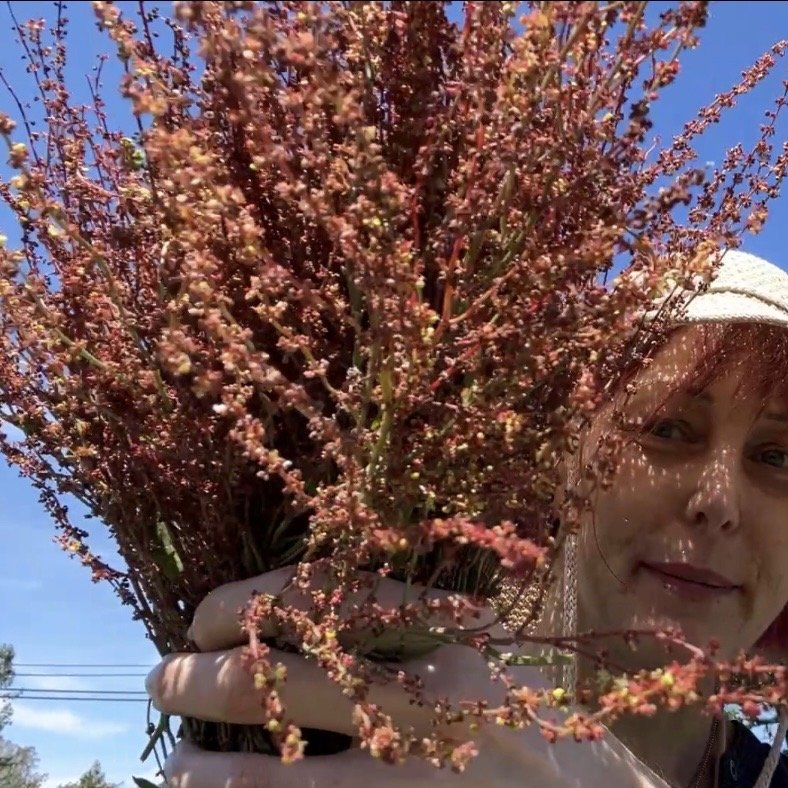
This is a photo I took near my house in mid-May 2026. There is a big patch along the side of the road. Fast forward to March 25, 2026.